Component
Clouds granular
v0.5.108, v0.5.110, v0.5.111
Delay & reverbMutable InstrumentsStereo
A granular cloud (Mutable Instruments Clouds).
Software v0.5.111
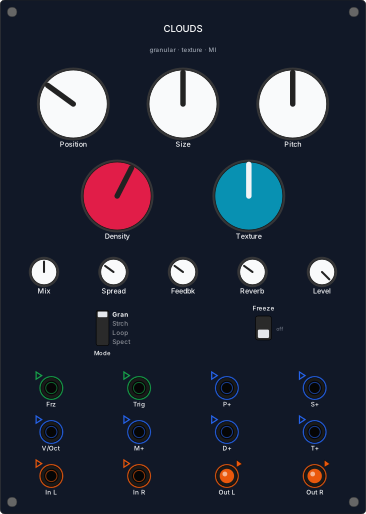
Overview
A granular cloud (Mutable Instruments Clouds).
A port of Mutable Instruments Clouds: a stereo effect that records what comes in and plays it back as a cloud of small grains. Position chooses where in the recording the grains come from, Size how long they are, Pitch transposes them (±24 semitones), Density sets how many there are and Texture their shape. Freeze (the switch or the Frz jack) stops recording, so you can play with what is in the buffer; Trig fires a single grain.
Mode switches between four ways of playing the buffer: granular, pitch shifting and time stretching, a looping delay, and a spectral mode. Mix blends dry and wet; Spread, Feedbk and Reverb add stereo width, feedback and the built-in reverb. A mono source on In L works too. The CV inputs add to their knob, as on the original: ±1 sweeps the whole range (pitch CV in volts per octave).
Controls
| Control | Range | Default | What it does |
|---|---|---|---|
| Position | 0 … 1 | 0.3 | Where in the buffer the grains come from. |
| Size | 0 … 1 | 0.5 | How big the grains are. |
| Pitch | -24 … 24 semi | 0 | Transposes the grains in semitones (±24). |
| Density | 0 … 1 | 0.6 | How many grains: middle = none, lower = regular, higher = random. |
| Texture | 0 … 1 | 0.5 | Shape of the grains; the top quarter adds diffusion. |
| Mix | 0 … 1 | 0.5 | Dry to wet. |
| Spread | 0 … 1 | 0.3 | Stereo width of the grains. |
| Feedbk | 0 … 1 | 0.3 | How much of the output goes back into the buffer. |
| Reverb | 0 … 1 | 0.3 | Amount of the built-in reverb. |
| Level | 0 … 1 | 1 | Output level. |
| Mode | Gran / Strch / Loop / Spect | Gran | Granular, stretch, looping delay or spectral. |
| Freeze | off / on | off | Stops recording, so the grains keep playing the frozen buffer. |
Ports
| Port | Direction | Signal | What it carries |
|---|---|---|---|
| Frz | in | gate | High = freeze the buffer. |
| Trig | in | gate | Each rising edge fires a single grain. |
| P+ | in | cv | Adds to the Position knob; ±1 sweeps its whole range. |
| S+ | in | cv | Adds to the Size knob; ±1 sweeps its whole range. |
| V/Oct | in | cv | Adds to Pitch, 1 V per octave. |
| M+ | in | cv | Adds to the Mix knob; ±1 sweeps its whole range. |
| D+ | in | cv | Adds to the Density knob; ±1 sweeps its whole range. |
| T+ | in | cv | Adds to the Texture knob; ±1 sweeps its whole range. |
| In L | in | audio | Audio in, left (or mono). |
| In R | in | audio | Audio in, right. |
| Out L | out | audio | Audio out, left. |
| Out R | out | audio | Audio out, right. |
How it works
The module runs Émilie Gillet's Clouds granular processor as it is. In granular mode, Density below the middle starts grains at a regular rate, above the middle at random moments, and right in the middle no new grains start. Texture up to three quarters shapes the grain envelope; above that it adds diffusion. The stretch mode uses WSOLA (overlap-add with correlation), and the spectral mode a phase vocoder.
Clouds works at 32 kHz. The wrapper resamples the input from 44.1 kHz to 32 kHz and the output back, linearly. Its buffers (118,784 and 65,408 bytes) live on the heap. Switching mode reorganises the buffer, so a short glitch at that moment is normal. The browser simulator compiles the same code to WebAssembly.
Runs on
- Teensy 4.1 (the MusicBrain Brain): about 5.9 % CPU per instance (one note, default settings), measured on firmware 0.5.108.
- The browser: the editor's simulator runs the same C++ code as WebAssembly, so what you hear while patching is what the Brain plays.
Try it
Patches to play (open them in the editor from their page): Generative jam, Krell.
In the editor's example set: ☁️ Clouds ambient (+Tides), 🎲 Generative jam (Marbles), 🌌 Krell (zelfspelend), 🌌 Krell, 🎲 Generative jam.
Editor: https://editor.musicbrain.nl
Sources & licences
- Based on Mutable Instruments Clouds by Émilie Gillet, open source under
the MIT licence (vendored in
firmware/lib/mi-clouds). - The MusicBrain wrapper is MIT licensed as well. This is a software port, not the Mutable Instruments hardware.
Versions
- 0.5.110: the CV inputs add to their knob instead of replacing it.
- Simulator (September 2026): the browser runs the same Clouds code as WebAssembly.
- 0.5.31: first version (July 2026), stereo in and out, four modes.
Earlier versions (2)v0.5.110, v0.5.108
Software v0.5.110
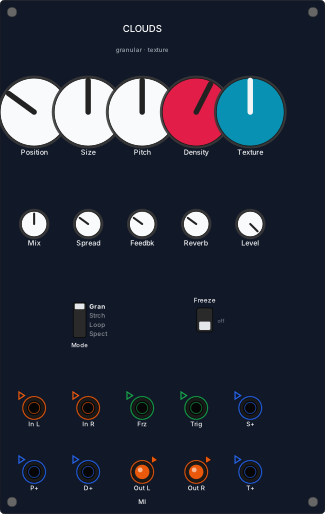
Overview
A granular cloud (Mutable Instruments Clouds).
A port of Mutable Instruments Clouds: a stereo effect that records what comes in and plays it back as a cloud of small grains. Position chooses where in the recording the grains come from, Size how long they are, Pitch transposes them (±24 semitones), Density sets how many there are and Texture their shape. Freeze (the switch or the Frz jack) stops recording, so you can play with what is in the buffer; Trig fires a single grain.
Mode switches between four ways of playing the buffer: granular, pitch shifting and time stretching, a looping delay, and a spectral mode. Mix blends dry and wet; Spread, Feedbk and Reverb add stereo width, feedback and the built-in reverb. A mono source on In L works too. The CV inputs add to their knob, as on the original: ±1 sweeps the whole range (pitch CV in volts per octave).
Controls
| Control | Range | Default | What it does |
|---|---|---|---|
| Position | 0 … 1 | 0.3 | Where in the buffer the grains come from. |
| Size | 0 … 1 | 0.5 | How big the grains are. |
| Pitch | -24 … 24 semi | 0 | Transposes the grains in semitones (±24). |
| Density | 0 … 1 | 0.6 | How many grains: middle = none, lower = regular, higher = random. |
| Texture | 0 … 1 | 0.5 | Shape of the grains; the top quarter adds diffusion. |
| Mix | 0 … 1 | 0.5 | Dry to wet. |
| Spread | 0 … 1 | 0.3 | Stereo width of the grains. |
| Feedbk | 0 … 1 | 0.3 | How much of the output goes back into the buffer. |
| Reverb | 0 … 1 | 0.3 | Amount of the built-in reverb. |
| Level | 0 … 1 | 1 | Output level. |
| Mode | Gran / Strch / Loop / Spect | Gran | Granular, stretch, looping delay or spectral. |
| Freeze | off / on | off | Stops recording, so the grains keep playing the frozen buffer. |
Ports
| Port | Direction | Signal | What it carries |
|---|---|---|---|
| In L | in | audio | Audio in, left (or mono). |
| In R | in | audio | Audio in, right. |
| Frz | in | gate | High = freeze the buffer. |
| Trig | in | gate | Each rising edge fires a single grain. |
| S+ | in | cv | Adds to the Size knob; ±1 sweeps its whole range. |
| Out L | out | audio | Audio out, left. |
| Out R | out | audio | Audio out, right. |
| P+ | in | cv | Adds to the Position knob; ±1 sweeps its whole range. |
| D+ | in | cv | Adds to the Density knob; ±1 sweeps its whole range. |
| T+ | in | cv | Adds to the Texture knob; ±1 sweeps its whole range. |
How it works
The module runs Émilie Gillet's Clouds granular processor as it is. In granular mode, Density below the middle starts grains at a regular rate, above the middle at random moments, and right in the middle no new grains start. Texture up to three quarters shapes the grain envelope; above that it adds diffusion. The stretch mode uses WSOLA (overlap-add with correlation), and the spectral mode a phase vocoder.
Clouds works at 32 kHz. The wrapper resamples the input from 44.1 kHz to 32 kHz and the output back, linearly. Its buffers (118,784 and 65,408 bytes) live on the heap. Switching mode reorganises the buffer, so a short glitch at that moment is normal. The browser simulator compiles the same code to WebAssembly.
Runs on
- Teensy 4.1 (the MusicBrain Brain): about 5.9 % CPU per instance (one note, default settings), measured on firmware 0.5.108.
- The browser: the editor's simulator runs the same C++ code as WebAssembly, so what you hear while patching is what the Brain plays.
Try it
In the editor's example set: ☁️ Clouds ambient (+Tides), 🎲 Generative jam (Marbles), 🌌 Krell (zelfspelend), 🌌 Krell, 🎲 Generative jam.
Editor: https://editor.musicbrain.nl
Sources & licences
- Based on Mutable Instruments Clouds by Émilie Gillet, open source under
the MIT licence (vendored in
firmware/lib/mi-clouds). - The MusicBrain wrapper is MIT licensed as well. This is a software port, not the Mutable Instruments hardware.
Versions
- 0.5.110: the CV inputs add to their knob instead of replacing it.
- Simulator (September 2026): the browser runs the same Clouds code as WebAssembly.
- 0.5.31: first version (July 2026), stereo in and out, four modes.
Software v0.5.108
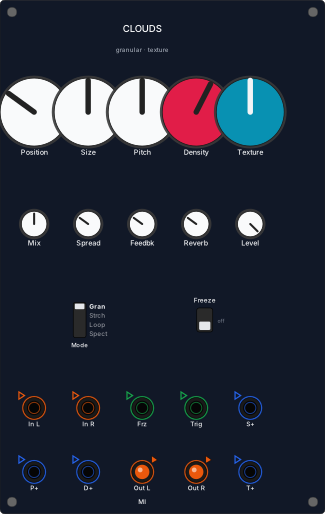
Overview
A granular cloud (Mutable Instruments Clouds).
A port of Mutable Instruments Clouds: a stereo effect that records what comes in and plays it back as a cloud of small grains. Position chooses where in the recording the grains come from, Size how long they are, Pitch transposes them (±24 semitones), Density sets how many there are and Texture their shape. Freeze (the switch or the Frz jack) stops recording, so you can play with what is in the buffer; Trig fires a single grain.
Mode switches between four ways of playing the buffer: granular, pitch shifting and time stretching, a looping delay, and a spectral mode. Mix blends dry and wet; Spread, Feedbk and Reverb add stereo width, feedback and the built-in reverb. A mono source on In L works too. The CV inputs take over their knob while patched (0 to 1; pitch CV in volts per octave).
Controls
| Control | Range | Default | What it does |
|---|---|---|---|
| Position | 0 … 1 | 0.3 | Where in the buffer the grains come from. |
| Size | 0 … 1 | 0.5 | How big the grains are. |
| Pitch | -24 … 24 semi | 0 | Transposes the grains in semitones (±24). |
| Density | 0 … 1 | 0.6 | How many grains: middle = none, lower = regular, higher = random. |
| Texture | 0 … 1 | 0.5 | Shape of the grains; the top quarter adds diffusion. |
| Mix | 0 … 1 | 0.5 | Dry to wet. |
| Spread | 0 … 1 | 0.3 | Stereo width of the grains. |
| Feedbk | 0 … 1 | 0.3 | How much of the output goes back into the buffer. |
| Reverb | 0 … 1 | 0.3 | Amount of the built-in reverb. |
| Level | 0 … 1 | 1 | Output level. |
| Mode | Gran / Strch / Loop / Spect | Gran | Granular, stretch, looping delay or spectral. |
| Freeze | off / on | off | Stops recording, so the grains keep playing the frozen buffer. |
Ports
| Port | Direction | Signal | What it carries |
|---|---|---|---|
| In L | in | audio | Audio in, left (or mono). |
| In R | in | audio | Audio in, right. |
| Frz | in | gate | High = freeze the buffer. |
| Trig | in | gate | Each rising edge fires a single grain. |
| S+ | in | cv | Sets Size (0 to 1) while patched. |
| Out L | out | audio | Audio out, left. |
| Out R | out | audio | Audio out, right. |
| P+ | in | cv | Sets Position (0 to 1) while patched. |
| D+ | in | cv | Sets Density (0 to 1) while patched. |
| T+ | in | cv | Sets Texture (0 to 1) while patched. |
How it works
The module runs Émilie Gillet's Clouds granular processor as it is. In granular mode, Density below the middle starts grains at a regular rate, above the middle at random moments, and right in the middle no new grains start. Texture up to three quarters shapes the grain envelope; above that it adds diffusion. The stretch mode uses WSOLA (overlap-add with correlation), and the spectral mode a phase vocoder.
Clouds works at 32 kHz. The wrapper resamples the input from 44.1 kHz to 32 kHz and the output back, linearly. Its buffers (118,784 and 65,408 bytes) live on the heap. Switching mode reorganises the buffer, so a short glitch at that moment is normal. The browser simulator compiles the same code to WebAssembly.
Runs on
- Teensy 4.1 (the MusicBrain Brain): about 5.9 % CPU per instance (one note, default settings), measured on firmware 0.5.108.
- The browser: the editor's simulator runs the same C++ code as WebAssembly, so what you hear while patching is what the Brain plays.
Try it
In the editor's example set: ☁️ Clouds ambient (+Tides), 🎲 Generative jam (Marbles), 🌌 Krell (zelfspelend), 🌌 Krell, 🎲 Generative jam.
Editor: https://editor.musicbrain.nl
Sources & licences
- Based on Mutable Instruments Clouds by Émilie Gillet, open source under
the MIT licence (vendored in
firmware/lib/mi-clouds). - The MusicBrain wrapper is MIT licensed as well. This is a software port, not the Mutable Instruments hardware.
Versions
- Simulator (September 2026): the browser runs the same Clouds code as WebAssembly.
- 0.5.31: first version (July 2026), stereo in and out, four modes.